Contact us
Rug care guide
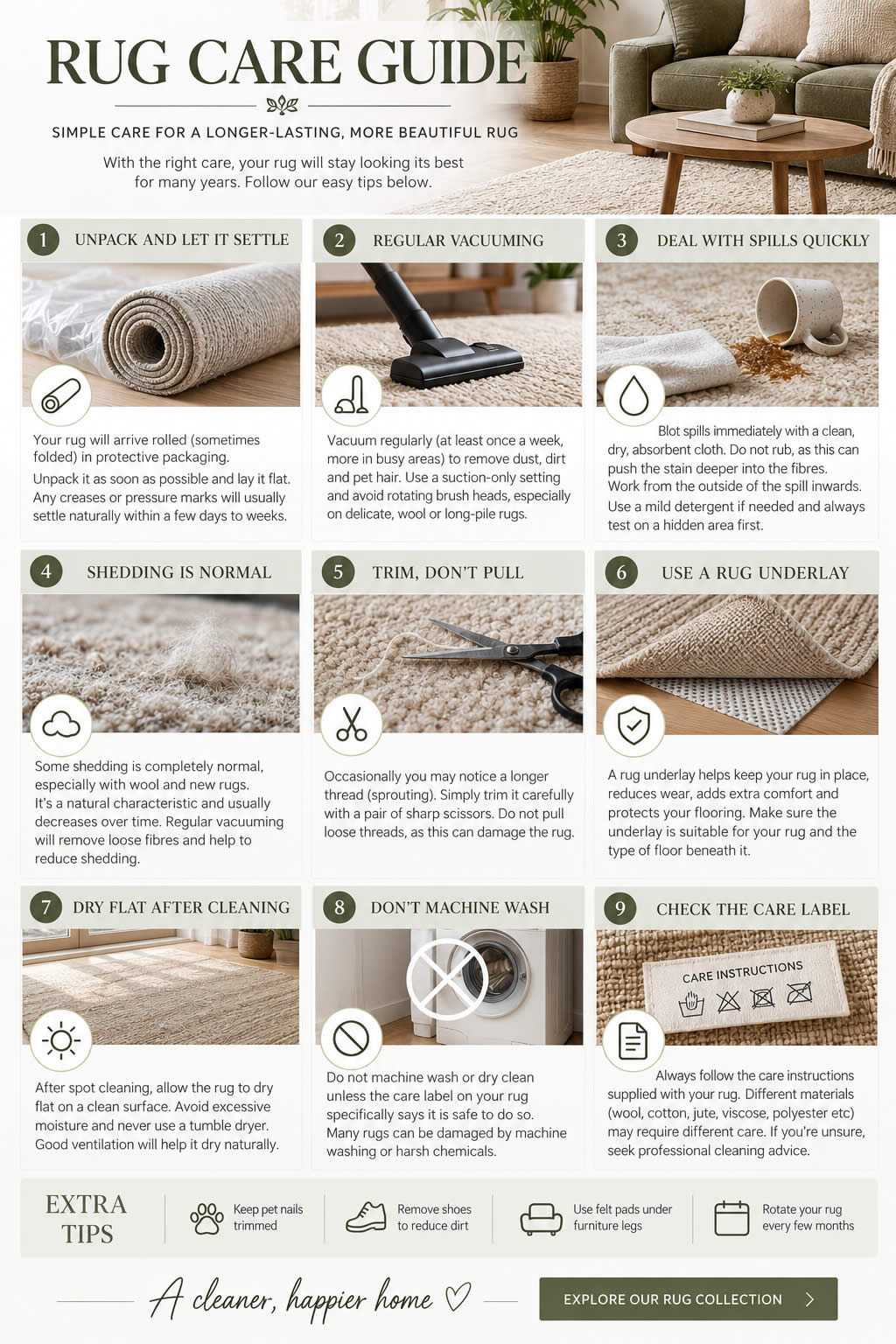
A little regular care can make a big difference to the appearance and life of your rug. From dealing with everyday dust and spills to understanding shedding, loose fibres and creases, knowing how to look after your rug will help keep it looking its best for longer.
Different fibres and constructions can require different care, so always check the care label or instructions supplied with your individual rug first.
When Your New Rug Arrives
Rugs are normally stored and transported rolled and, in some cases, folded. When your new rug arrives, remove the packaging as soon as practical and lay the rug out flat.
You may initially notice creases, pressure marks or slightly raised edges. These are a normal result of being rolled or folded during storage and transportation and will usually relax naturally once the rug has been laid flat.
Allow the rug time to settle into its new surroundings. Depending on its construction and how it was packaged, this can take anything from a few days to a few weeks.
Helping Creases Settle
Keep the rug laid flat and avoid repeatedly rolling it back up. Placing furniture carefully on the rug can help it settle, although very heavy furniture should not be used simply to force out a crease.
Never use excessive heat, an iron or other heated appliance on your rug unless the manufacturer's instructions specifically state that it is safe to do so.
Regular Vacuuming
Regular vacuuming removes dust, dirt, pet hair and other particles before they become embedded in the pile.
For most rugs, vacuuming around once a week is a good starting point, with more frequent cleaning in busy areas.
Where appropriate, use a suction-only vacuum or nozzle attachment rather than a rotating brush or beater bar. Rotating brushes can be too aggressive for some rug fibres and constructions.
For shaggy and long-pile rugs, gently shaking the rug outside can help loosen dirt. A vacuum nozzle attachment can then be used carefully to clean the pile.
Don't forget to occasionally clean underneath your rug too.
Pile Shedding & Fluff
If your new rug sheds some fibres, don't immediately assume something is wrong.
Some shedding is completely normal, particularly with wool rugs and certain other types of pile. Loose fibres left over from the manufacturing process can work their way to the surface during the first weeks or months of use.
Regular, gentle vacuuming will help remove these loose fibres. Shedding will often reduce as the rug settles and is not necessarily an indication that the rug is wearing out.
Avoid rubbing or aggressively vacuuming the rug in an attempt to speed up the shedding process, as this may damage the pile.
Loose Threads & Sprouting
Occasionally, you may notice an individual fibre or thread sitting higher than the surrounding pile. This is sometimes known as sprouting.
Don't pull it.
Pulling a loose or raised thread can potentially damage the rug's construction. Instead, use a pair of sharp scissors to carefully trim the thread level with the surrounding pile.
Take care not to cut into the rug itself.
Spills & Stains
The sooner you deal with a spill, the better.
Use a clean, dry, absorbent cloth or white paper towel to gently blot the affected area and absorb as much liquid as possible.
Blot - don't rub. Rubbing can spread the spill and push it further into the fibres.
Work from the outside of the affected area towards the centre to reduce the chance of the stain spreading.
If further cleaning is required, check the rug's individual care instructions before applying water, detergent or a cleaning product. If appropriate for the material, a small amount of mild detergent may be suitable, but always test it first on an inconspicuous area.
Avoid harsh chemicals and excessive moisture.
For stubborn stains or delicate rugs, professional cleaning advice is the safest option.
Don't Machine Wash Unless the Label Says You Can
Some washable rugs are specifically designed for machine washing, but never assume that a rug can go into a washing machine.
Machine washing can damage the fibres, backing, shape or construction of rugs that aren't designed for it.
Similarly, don't dry clean a rug unless its individual care instructions confirm that dry cleaning is suitable.
Always follow the care label for your particular rug.
Drying Your Rug
If part of your rug becomes damp during spot cleaning, allow it to dry thoroughly.
Where practical, keep the rug flat while it dries and ensure there is good ventilation around it.
Avoid excessive heat and don't tumble dry a rug unless the care label specifically says that you can.
Don't place furniture back onto a damp rug. Allow it to dry completely first.
Rotate Your Rug Regularly
Foot traffic, furniture and natural light can cause some parts of a rug to wear or fade faster than others.
Rotating your rug periodically helps distribute this wear more evenly.
As a general guide, consider rotating it approximately every six months, or more frequently in particularly busy or sunny rooms.
Protect Your Rug From Strong Sunlight
Prolonged exposure to strong direct sunlight can cause the colours of some rugs to fade over time.
If your rug sits in a particularly sunny position, curtains or blinds can help protect it during the brightest part of the day.
Regularly rotating the rug can also help prevent one area receiving significantly more sunlight than another.
Use a Rug Underlay
A suitable rug underlay can help keep your rug securely in position and reduce movement on smooth floors.
It can also provide additional cushioning, reduce wear and help protect the flooring underneath.
Make sure the underlay you choose is suitable for both your rug and the flooring beneath it, particularly with specialist flooring.
Furniture & Heavy Objects
Heavy furniture can leave temporary indentations in some rug piles.
Furniture pads or cups can help spread the weight and reduce pressure on individual areas.
When moving furniture, lift it rather than dragging it across the rug. Dragging heavy objects can damage both the pile and the rug's construction.
Pets & Your Rug
Regular vacuuming will help remove pet hair, while keeping claws trimmed can reduce the likelihood of fibres becoming snagged.
If a pet catches or pulls a thread from the rug, don't pull the resulting loose fibre. Carefully trim it in the same way as any other sprouting thread.
Deal with pet accidents promptly and follow the cleaning instructions for your particular rug material.
When to Use a Professional Rug Cleaner
Some stains and rugs are best left to a specialist.
Consider professional cleaning for particularly stubborn stains, heavily soiled rugs, delicate fibres, valuable rugs or whenever the care instructions recommend specialist cleaning.
Make sure the cleaner you choose has experience with your particular type of rug.
Always Check Your Rug's Care Instructions
There isn't one cleaning method that's suitable for every rug.
Wool, polypropylene, polyester, viscose, cotton, jute and other fibres can all require different treatment. Construction methods, backing materials and dyes can also affect how a rug should be cleaned.
For this reason, the care instructions supplied with your individual rug should always take priority over general rug-care advice.
Quick Rug Care Checklist
DO: vacuum regularly using an appropriate setting, blot spills promptly, rotate your rug periodically, trim raised threads rather than pulling them, use a suitable underlay and allow damp areas to dry completely.
DON'T: aggressively scrub stains, pull loose threads, use harsh chemicals, soak your rug unnecessarily, use excessive heat or machine wash or dry clean a rug unless its care instructions specifically permit it.
Keep Your Rug Looking Beautiful
Most rugs don't need complicated maintenance. A little regular care, prompt attention to spills and the correct cleaning method for the material can help keep your rug looking beautiful for years to come.
If you're still choosing the perfect rug for your room, take a look at our Rug Size Guide and Rug Placement Guide for more help finding the right size and position for your space.